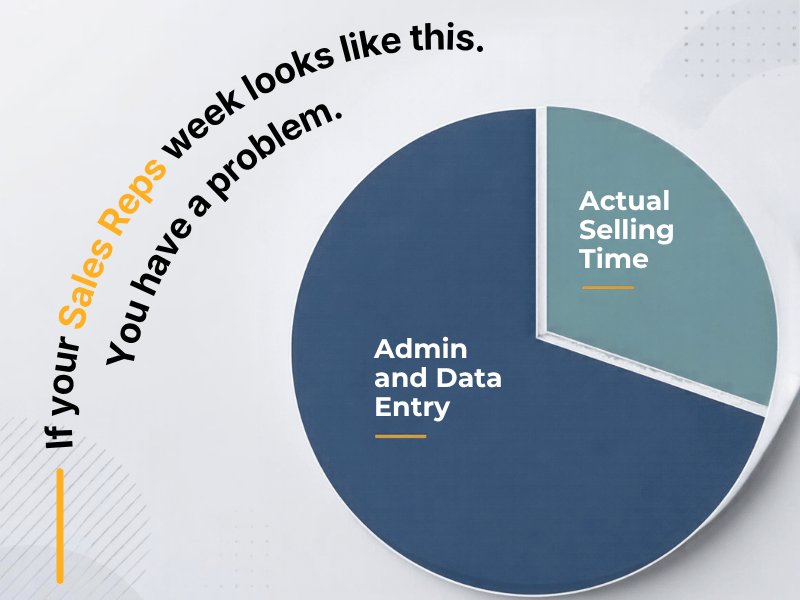
Your SDR Isn't Slow. Your Handoff Process Was Never Designed
Most companies treat missed lead handoff SLAs as a rep performance issue and respond with coaching and dashboards. The real problem is usually that no one ever designed the handoff process in the first place, it just accreted as the team grew. This post breaks down how to spot the difference and what an actual designed handoff looks like.
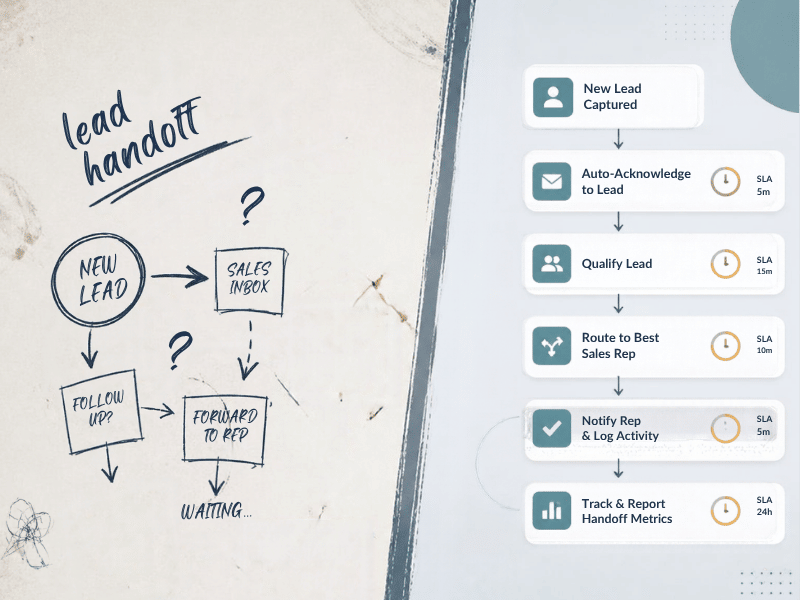
Your SDR isn't slow. Your handoff process was never actually designed, it just happened.
I see this constantly. A company grows from 5 reps to 15, SDRs start booking meetings, and somewhere in that growth nobody sat down and defined what happens in the 10 minutes between a lead qualifying and an AE picking it up. No SLA, no ownership rule, no system trigger. Just a Slack message and hope that someone's paying attention.
Then leadership pulls a report showing slow response times and reads it as a motivation problem. Coaching gets assigned. A new dashboard gets built so managers can watch response times in real time. Nobody touches the actual gap, which is that the process was never designed. It accreted, one hire and one workaround at a time, until it looked like a process without ever being built like one.
The Habit That Works Until Someone Leaves
Here's the tell. Ask any VP Sales to walk you through the exact handoff sequence, step by step, and watch what happens. Most can describe the intent (SDR qualifies, AE gets notified, meeting gets scheduled) but can't name the actual trigger, the actual owner, or the actual time window. That's because the sequence lives in three or four people's heads, not in the CRM.
I worked with a company doing about $8M in ARR where the handoff worked fine for two years. Then the SDR who'd been quietly Slacking every qualified lead to the right AE, based on territory knowledge nobody else had documented, left for a competitor. Response time on new leads went from an average of 22 minutes to over 6 hours in the same week. Nothing in the CRM changed. No settings were touched. The only thing that changed was the person carrying the process in their head.
That's not a coaching problem. That's a single point of failure that got mistaken for a system because it worked long enough for everyone to stop questioning it.
Why the Slow Response Time Report Is Lying to You
When leadership sees a report showing average response time creeping up, the instinct is to treat it like an individual accountability issue. Rep A is at 4 hours, Rep B is at 12 minutes, so Rep A needs coaching. That's the wrong read almost every time I've seen it.
Pull the data one layer deeper and ask what actually triggers the clock. If your CRM doesn't have a hard-defined moment where a lead status change fires an assignment and starts an SLA timer, then your response time report is measuring luck, not performance. Rep B might be fast because they happen to check their notifications constantly. Rep A might be slow because leads are landing in a queue nobody set up alerts for, or because there's ambiguity about who owns leads from a specific source and everyone waits for someone else to claim it.
I've audited pipelines where the actual root cause of a 4-hour average response time was that inbound leads from a specific form were tagged with a lifecycle stage that didn't trigger any workflow at all. The lead just sat there until someone happened to look at the list view. No amount of coaching fixes a workflow gap. You can put Rep A through a training every week and the leads will still sit untouched, because the system never told anyone they existed.
What an Actually Designed Handoff Looks Like
A designed handoff isn't complicated, but it does require someone to actually sit down and build it instead of letting it emerge. At minimum it needs four components: a hard-defined trigger status, a single named owner or owner-assignment rule, a time-bound SLA, and an automatic escalation path if the SLA is missed.
In HubSpot or Salesforce, this looks like a lead hitting a qualified-for-handoff status, a round robin or territory-based assignment rule firing immediately, a 15-minute or 30-minute countdown depending on your sales cycle, and an automatic Slack alert to a sales manager if the assigned AE hasn't logged an activity against that lead by the deadline. None of this requires a headcount. It requires someone spending an afternoon in workflow builder instead of another meeting about response time.
One client, a 40-person industrial B2B company, had been averaging 3.5 hours on lead response for over a year despite two rounds of sales coaching. We rebuilt the handoff as a workflow: qualified status triggers instant owner assignment based on territory, a 20-minute SLA timer starts, and if no engagement is logged, it auto-escalates to the sales manager and re-assigns after 40 minutes. Average response time dropped to under 25 minutes in the first month. No new hires, no new coaching program, just a rule that didn't exist before.
The Real Question Nobody's Asking
Most companies audit close rate obsessively. Quarterly, sometimes monthly. Almost nobody audits the handoff SLA itself, because it's assumed to be fine as long as deals are closing. But a handoff that only works because your best SDR happens to be attentive isn't a functioning system, it's a habit that works until someone leaves, gets promoted, or takes a two-week vacation.
If your handoff process exists only in your reps' heads, you don't actually have a process. You have an informal agreement that nobody's tested under stress. The fix isn't a pep talk or a new dashboard for managers to stare at. It's a rule, built into the CRM, that doesn't depend on anyone remembering anything.
When's the last time anyone at your company actually audited the handoff SLA instead of just the close rate? If you can't answer that in under a minute, that's your answer.
If this sounds familiar and you want a second set of eyes on how leads actually move from SDR to AE in your CRM, that's the kind of gap LangLine Consulting gets called in to fix. Reach out and we'll walk through what a properly designed handoff would look like for your specific setup.