Why I Rebuilt a Marketing Stack Instead of Hiring a Bigger Team
As a department-of-1.5 marketing director at small company, a full rebrand and website rebuild, a restructured social strategy that grew followers 60%, and an AI content flywheel that saved 4 to 6 hours a week. This post breaks down why the fix was systems, not headcount, and what that looked like in practice.

When I joined a logistics company as Director of Marketing, I was reporting straight to the CEO with partial time from the office manager to support me. Asset-light 3PL, focused on operations, marketing and sales that hadn't been touched in years. The easy move would have been to ask for headcount. I didn't. Here's what I did instead, and why.
The brand didn't match the business anymore
First problem was visual and it was obvious the moment I looked at it. The brand, on the website, in social, in every piece of collateral, didn't reflect where the company actually was or where it was trying to go. The CEO recognized this, which was part of the reason to bring me on. So the first move was a full rebrand, visual identity and voice, including building and launching a new website from the ground up. Not a redesign exercise for its own sake. The market perception needed to catch up to the business.
Social media was active but directionless
The company had a social presence, but no real strategy behind it, inconsistent topics, no defined cadence, no consistent voice. I restructured the whole approach, what we posted, how often, and how it sounded. Followers grew 60 percent, from 1,400 to 2,350. That number matters less than the reason it happened: the content finally had a point of view instead of just filling a calendar.
The content bottleneck was a team problem, and I didn't have a big team
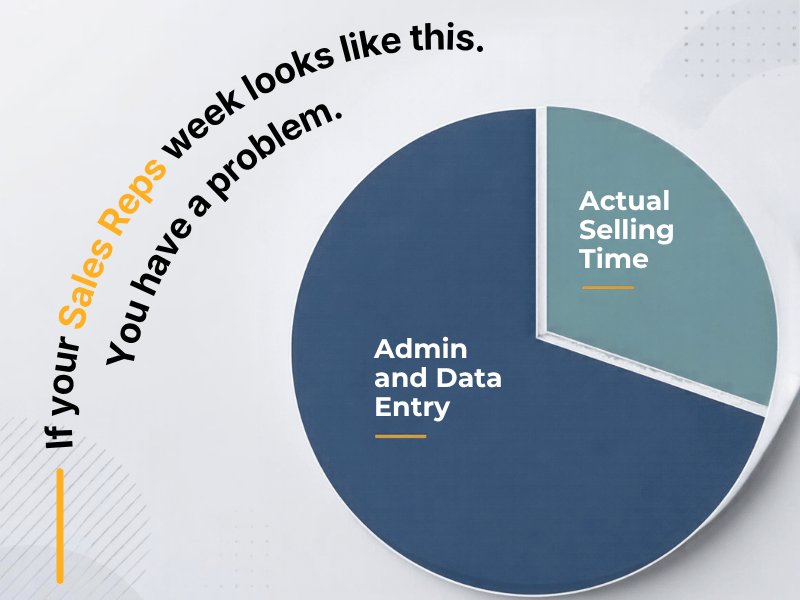
This is the part that actually required rethinking how the work got done, not just what got done. A department of 1.5 can't manually research topics, write posts, and manage scheduling across multiple channels every week and still do everything else the role requires. So I built an AI content flywheel: it analyzed current performance, researched relevant topics, drafted and recommended content, then scheduled and posted it. That system saved 4 to 6 hours a week, hours that went straight back into strategy and the parts of the job that actually needed a human.
This is the piece people ask about most, and it's also the one I think gets misunderstood. The point wasn't replacing judgment with automation. It was removing the repetitive research-and-drafting cycle so the judgment calls, what to say, what matters, what's worth publishing, still came from a person, just faster.
HubSpot was underused, so I rebuilt how it actually worked
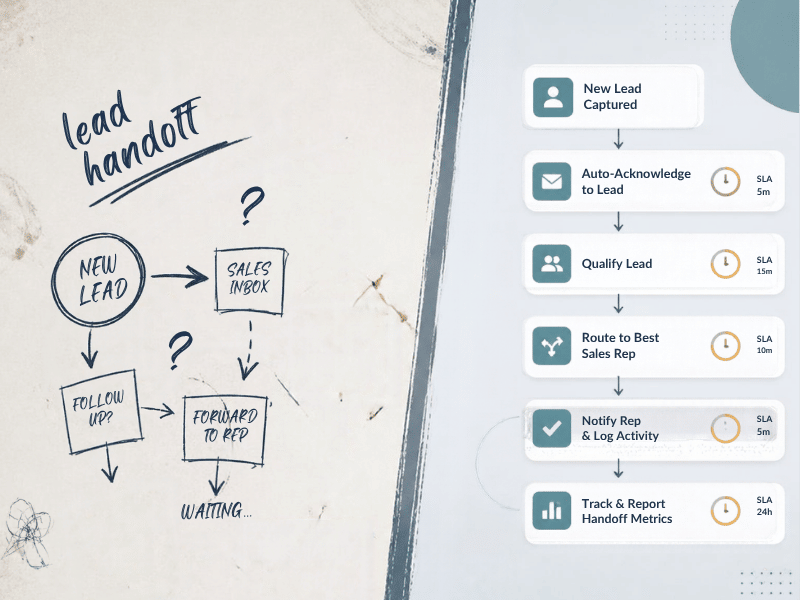
The CRM was in place but not doing much heavy lifting. I overhauled it through workflow automation and email sequencing, which increased outreach efficiency and opportunity conversion. Then I layered in an AI-driven prospecting tool, combining n8n, Perplexity, and Apollo.ai, to surface qualified leads instead of relying on manual list-building. Same principle as the content flywheel: automate the repetitive surfacing work, keep the actual decisions and relationship-building human.
Why I didn't just ask for a bigger team
Headcount is the default answer to "there's too much work for one person." It's also usually the slowest and most expensive one. Hiring takes months, ramps take longer, and a bigger team introduces its own coordination overhead. Before adding people, I wanted to know how much of the workload was actually judgment work that needed a human, versus repetitive work that could be systematized. Turned out most of the bottleneck was the second kind.
That's not a universal answer. Some problems genuinely need more people. But most companies reach for headcount before they've honestly answered that question, and I'd rather build the system first and find out what's actually left for a person to do.
What this looked like in practice
Rebrand and new website. Social strategy overhaul. An AI content system replacing hours of manual work every week. A CRM that finally supported the sales process instead of sitting next to it. All of it run by one person reporting directly to the CEO, in a little over a year.
The lesson I keep coming back to isn't about AI tools specifically. It's that most marketing and RevOps functions are carrying more manual, repetitive work than they need to, and fixing that frees up exactly the kind of time a lean team actually needs to grow.