The Forecast Gap: What Your Board Wants vs. What Your Ops Person Can Actually Deliver
Boards ask for forecasting and capacity planning while the one person running the CRM is stuck on data hygiene with no mandate for strategy. This post breaks down why that mismatch is structural, not a performance problem, and what to actually fund if you want a forecast you can trust.
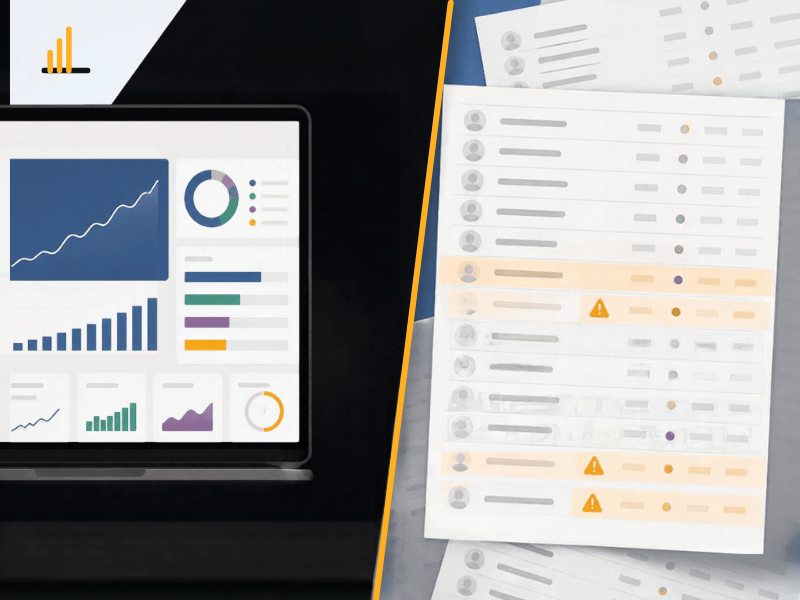
Your board wants a forecast model. Your ops person is stuck fixing duplicate contact records.
Nobody puts this gap on a slide, but it shows up in every quarterly review where the numbers dont hold up under questioning. Leadership asks for capacity planning, pipeline modeling, territory design. The person who touches the CRM every day has a backlog of data hygiene tickets and no actual authority to work on strategy. These are two different jobs wearing the same job title.
I see this constantly in companies with 20 to 150 employees. Someone gets hired to keep the CRM clean, maybe run a few reports, handle onboarding for new reps. A year later, leadership expects that same person to build a forecasting function on the side, in whatever time is left after the tickets. Nobody rewrote the job description. Nobody added headcount. The expectation just grew and attached itself to whoever was already in the seat.
The Job You Funded Is Not the Job You Think You Have
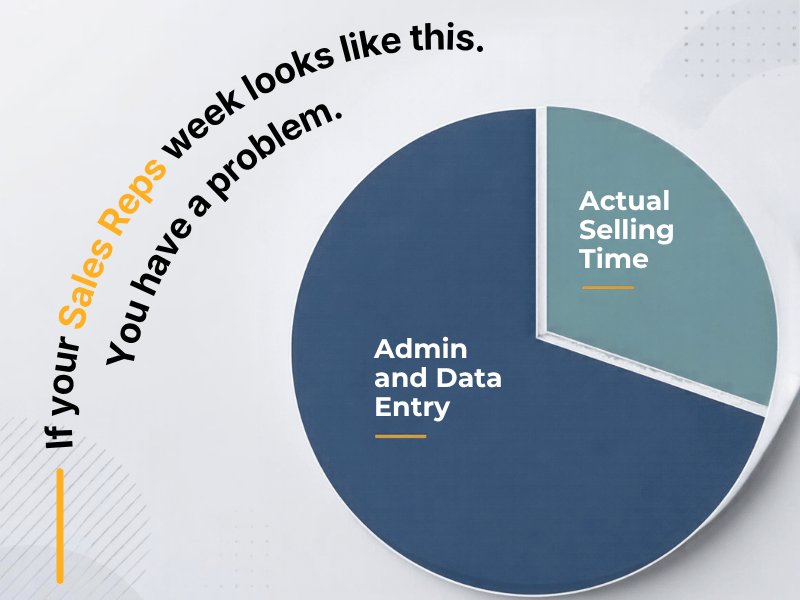
Here is the part that gets missed in most planning conversations: the forecast you get reflects the job you actually funded, not the job you wish you had. If your ops hire spends 30 hours a week on data cleanup, ticket triage, and one-off reporting requests from sales reps, there is no version of reality where they also build a rolling 12-month pipeline model with scenario planning.
I worked with a 60-person B2B services company where the ops lead was carrying deduplication for three merged CRM instances after an acquisition, plus fielding daily custom report requests from four regional sales managers. The CEO wanted quarterly capacity planning by territory. When we mapped actual hours, the ops lead had roughly four hours a week available for anything strategic. Four hours does not build a forecasting model. Four hours barely gets you a clean pipeline report.
The fix was not hiring the ops lead to work harder. It was separating the two functions on paper and in headcount, so leadership could see the tradeoff instead of assuming it would magically resolve itself.
Why This Gap Widens at 20 to 150 Employees Specifically
This size band is where the mismatch is worst, and theres a reason. Below 20 employees, founders usually still touch the CRM themselves, so the gap is visible because they feel it directly. Above 150, most companies have hired a dedicated RevOps function or at least a forecasting analyst, because the pipeline is big enough that guessing costs real money.
In between, companies have outgrown founder-led data entry but havent yet accepted that strategic planning is a distinct discipline from CRM administration. They hire one ops person and assume that person can flex between janitorial work and strategic work depending on the week. That assumption is where the trouble starts.
A marketing lead at a 90-person SaaS company told me their ops hire was expected to keep Salesforce data clean, manage the marketing automation platform, build attribution reports, and now also produce a bookings forecast for the board deck. Four distinct skill sets, one person, one salary. The board kept asking why the forecast was consistently off by 15 to 20 percent. The answer had nothing to do with forecasting methodology. The answer was that nobody had time to actually build the model correctly, so it got assembled the night before the board meeting from whatever pipeline data happened to be current.
What Strategic Planning Actually Requires That Data Hygiene Does Not
Forecasting, capacity planning, and territory design require sustained, uninterrupted thinking time. You cannot build a defensible pipeline model in the gaps between fixing a broken workflow and merging duplicate accounts. These are fundamentally different cognitive modes.
Data hygiene work is reactive. A ticket comes in, you fix it, you move to the next one. Planning work is proactive and requires you to step back from the day-to-day and model scenarios that dont exist yet. Someone constantly pulled into reactive mode cannot reliably produce proactive output, no matter how skilled they are.
There is also a mandate problem. Even if your ops person had the time, do they have the authority to challenge a sales leaders territory assumptions or push back on an unrealistic growth number from the CEO? Usually not, because their role was defined as support staff, not strategic partner. Changing the time allocation without changing the mandate just produces a forecast nobody trusts, because the person who built it wasnt positioned to ask hard questions of the people above them.
I saw this play out at a distribution company where the ops analyst built a genuinely solid capacity model, then watched the VP of Sales override the numbers with gut-feel targets because the analyst had no standing to push back in the room. The model was fine. The organizational structure around it wasnt.
What To Actually Fund If You Want a Forecast You Can Trust
If you want strategic output, you have two real options. Free up the time your current ops person needs by hiring or outsourcing the data hygiene and administrative work, or bring in someone whose entire mandate is the planning layer, reporting directly into leadership with the authority to challenge assumptions.
What you cannot do is keep the current arrangement and expect a different result next quarter. That is the definition of getting the same answer while changing nothing about the inputs.
Start by asking a blunt question in your next leadership meeting: what does our ops person actually have time to own this quarter. Not what you assume they own, not what their job title implies, what they have real hours for after the tickets, the fires, and the ongoing maintenance. Write that list down. Compare it to what the board expects to see in the next forecast deck. The gap between those two lists is your actual problem, and its solvable, but only once its named honestly instead of papered over with a spreadsheet built at midnight.
If that gap looks bigger than youd like to admit in a board meeting, thats worth a conversation. LangLine works with companies in exactly this size range to separate the CRM maintenance layer from the planning layer, so the forecast you present is actually built on real capacity instead of borrowed time. Reach out if youd rather fix this before your next quarterly review than during it.